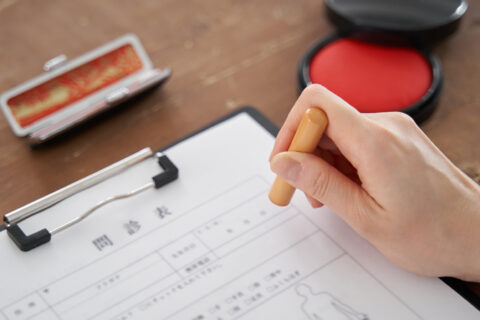


If you’re a foreign nurse working in Japan — or getting ready to start — there’s a good chance nobody warned you about the hanko. You showed up prepared with your nursing license, your residence card, your registered address, and maybe even a working knowledge of medical Japanese. And then HR handed you a stack of forms and asked for your seal.
Hanko for nurses in Japan is not a niche concern. It comes up at contract signing, during benefits enrollment, at the bank, at city hall, and in the ongoing rhythm of hospital administration. For foreign nurses in particular, the hanko sits at the intersection of two systems — Japanese employment bureaucracy and healthcare-sector paperwork — and both of them use it as a default.
This guide covers the practical side: why nurses specifically get asked for a seal, which documents you’ll encounter and when, what type of hanko actually fits daily nursing admin, and how to order one in English without visiting a Japanese-language shop. It’s written for nurses who are newly arrived, mid-onboarding, or already working in Japan and quietly wondering whether they’ve been handling this correctly.
Why This Segment Is Asked for a Seal
Nurses in Japan operate inside one of the most document-intensive professional environments in the country. That’s true for Japanese nurses too, but foreign nurses face the same paperwork load without the decades of cultural context that makes the hanko feel automatic.
Japan’s standard employment system — the one your hospital’s HR department runs on — uses the hanko as its default sign-off tool. Labor contracts, social insurance enrollment, tax declarations, and payroll registration all flow through forms that expect a seal. In much of the private sector, a written signature is increasingly accepted as an alternative. In healthcare, especially at public hospitals, large private hospital chains, and any facility with government affiliations, the hanko remains the norm.
There’s also a layer specific to nursing. The healthcare sector in Japan operates under strict documentation requirements for patient safety, liability, and internal quality control. Incident reports, medication administration logs, continuing education records, and license renewal paperwork all sit within systems that were built around the hanko. As a nurse, you’re not just a salaried employee — you’re a licensed professional within a regulated field, and the documentation standards reflect that.
For foreign nurses, the hanko also functions as a small but visible marker of integration. Being the only staff member without one creates friction in daily workflows, even when HR technically allows a signature. It adds extra steps, requires exception approvals, and occasionally delays processing on time-sensitive forms.
Micro-scenario: Ines, a nurse from Brazil working at a private hospital in Saitama, used a signature for her first three months. It was accepted, but every form required a handwritten note from her supervisor confirming the exception. When her hanko arrived, that process disappeared entirely. Two minutes of admin became thirty seconds.
Common Documents and Timelines
The hanko requirement for nurses in Japan shows up across several distinct phases. Knowing when to expect it helps you prepare rather than react.
At contract signing (before or on day one):
- Employment contract
- Confirmation of working hours and salary terms
- Non-disclosure or data handling agreements
- Shift or rotation schedule acknowledgment forms at some hospitals
During the first week of onboarding:
- Social insurance enrollment (health insurance and pension — shakai hoken)
- Tax withholding declaration form
- Bank account registration if your employer processes payroll through a nominated account
- Employee handbook acknowledgment forms
- Commuter pass or transport allowance application
During ongoing daily and monthly admin:
- Internal request forms (paid leave, overtime, schedule changes)
- Incident or near-miss documentation
- Medication record sign-offs at some facilities
- Expense reimbursement forms
- Continuing education attendance records
- License renewal supporting documentation
The onboarding window is the most time-pressured. Most HR departments expect paperwork complete within three to five business days of your start date. If your hanko hasn’t arrived by then, you’ll need to negotiate a temporary signature arrangement — which many employers will allow, but it’s not guaranteed and it creates extra administrative steps.
Checklist — confirm these with HR before your first day:
- Is a hanko required for the employment contract, or is a signature accepted?
- Which specific forms require a seal?
- Is there a preferred size (most common is 10.5mm–12mm)?
- Should the name be in katakana, kanji, or is romaji acceptable?
- Does the hospital have a preferred vendor, or are you free to order independently?
Common mistakes:
Ordering too late. Even fast-service providers need a few business days for a custom seal. Order at least one to two weeks before your start date.
Assuming romaji is universally accepted. Some institutions — particularly public hospitals — prefer or require katakana. If you order in romaji and HR flags it, you’ll need to reorder. Katakana is the safer default for most nurses.
Using a full name when a surname-only seal is standard. Most Japanese employees use a surname-only hanko for daily HR admin. Check what your colleagues use before deciding.
Recommended Hanko Type and Size
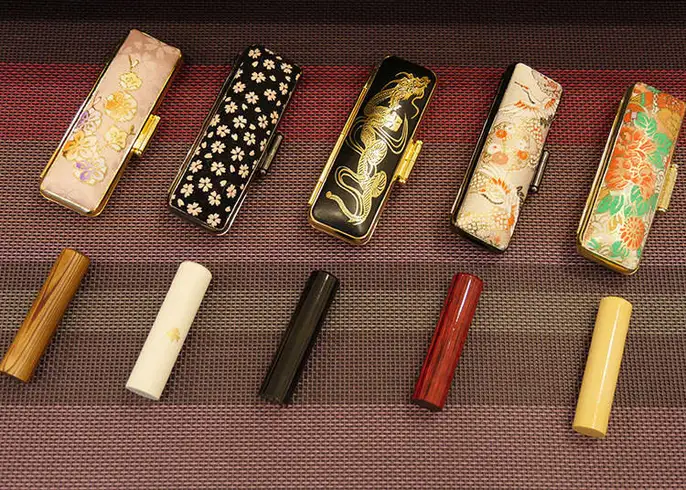
For daily nursing admin in Japan, the right choice is almost always a mitome-in (認め印) — a personal everyday seal used for standard administrative and employment purposes. This is not the same as a jitsuin (実印), which is a formally registered seal used for major legal transactions. You are very unlikely to need a jitsuin for anything related to nursing work or standard life admin.
Size: Stay within the 10.5mm to 12mm range. An 11mm seal is the most common choice and fits cleanly on standard form fields. Anything larger becomes awkward on small boxes; anything smaller can be harder to ink cleanly.
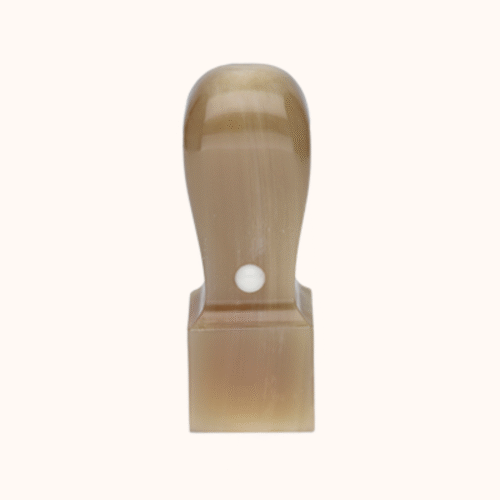
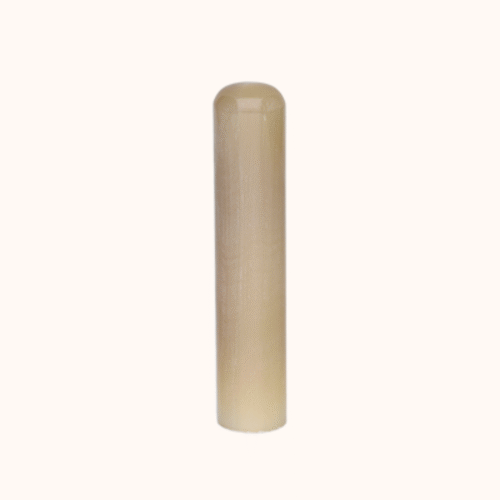
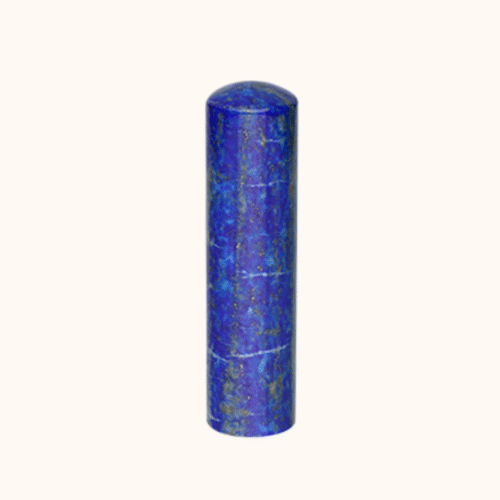
Material: For a work hanko, practical durability matters more than aesthetics. Resin, acrylic, and wood composites are all fine. You don’t need premium materials for a mitome-in used on HR forms.
Name rendering options for foreign nurses:
- Katakana: The most widely accepted format for foreign names. Unmistakably non-Japanese, but completely standard in the hanko context. A surname-only katakana seal — ジョンソン, for example — works well across most institutions. This is the recommended default if you’re unsure.
- Kanji: If your name has a recognized kanji rendering, or if you’ve been using a Japanese name professionally, this is equally valid and sometimes preferred at more traditional institutions.
- Romaji: Accepted at many private hospitals, international clinics, and foreign-affiliated facilities. Less reliable at public hospitals and government-linked workplaces. If there’s any doubt, katakana is safer.
Micro-scenario: Fatima, a nurse from Morocco working at a university hospital in Kyoto, ordered a katakana mitome-in before her start date. It was accepted without question across HR, city hall registration, and her bank account setup. She used the same seal for all three. One seal, no complications.
On the digital side: some hospitals in Japan are beginning to adopt electronic approval systems that support digital hanko equivalents. If your hospital is already on a digital workflow platform, it’s worth asking HR whether a digital seal is accepted alongside or instead of a physical one. For most nurses currently onboarding, however, a physical mitome-in remains the practical standard.
Ordering Tips in English
Most traditional hanko shops in Japan operate in Japanese only — which creates a real barrier when you need your foreign name rendered correctly in katakana or romaji, and when you don’t have time to navigate the process in a second language.
HankoHub handles this specifically. The entire ordering process is in English, foreign name rendering in katakana or romaji is a standard part of the service, and you can confirm your name format before the seal is produced. For nurses working under tight onboarding timelines, ordering online in English — without visiting a physical shop or relying on a Japanese-speaking colleague to translate — is a genuine practical advantage.
Tips for ordering:
- Order at least one to two weeks before your start date. Even fast-service providers need processing and shipping time.
- Have your name as it appears on your residence card ready before you begin the order.
- Confirm with HR whether katakana, kanji, or romaji is preferred. If they have no preference, choose katakana.
- For daily nursing admin — HR forms, city hall, banking — a standard resin or acrylic mitome-in at 10.5mm–12mm is completely sufficient.
- If you want one seal that covers work, city hall, and daily life admin, a 10.5–12mm mitome-in does all of that. You don’t need separate seals for each context at this level.
If you’re still looking for the right role, ComfysCareer is a solid starting point for foreigner-friendly jobs in Japan.
FAQ
Do I legally need a hanko to work as a nurse in Japan? Not in every case — the legal requirement varies by institution and document type. Practically, most hospitals in Japan use hanko as the default for employment documentation, and many will expect one even if they’re technically able to accept a signature. Having one before your start date is the safest approach.
Can I use a signature instead of a hanko? Some employers will accept a signature, particularly international hospitals or private clinics with foreign management. Public hospitals and large Japanese healthcare networks commonly require a seal, at least for formal HR documents. Confirm with your employer before assuming a signature is sufficient.
Does the name on my hanko need to match my passport exactly? Your hanko should reflect the name you’re using professionally in Japan — which is typically the name on your residence card. For most foreign nurses, that means a katakana rendering of your legal name, or your surname only. If you’ve registered your nursing license under a specific name format, use that as your reference.
What size hanko do I need for hospital HR forms? A 10.5mm to 12mm mitome-in fits the standard form fields used in Japanese HR paperwork. This range is also consistent with what most Japanese employees use for personal admin. There’s no need to go larger.
Can one hanko work for everything — work, city hall, banking? For most foreign nurses, yes. A mitome-in in the standard size range covers employment contracts, HR forms, national health insurance enrollment, resident registration at city hall, and bank account setup. The only exception is if you need to complete a major legal transaction — a large loan, property purchase — which requires a formally registered jitsuin. For nursing life in Japan, a mitome-in handles everything.
My hanko hasn’t arrived and my start date is tomorrow. What do I do? Contact your HR department and ask whether a temporary signature is acceptable while you wait. Most will accommodate this with a brief internal note. In parallel, check whether expedited shipping is available from your hanko provider — HankoHub offers options for time-sensitive situations.
Does it matter where I order my hanko? What matters to your employer is the seal itself — the correct name, appropriate size, and clean impression. They do not typically care which vendor produced it. Order from a provider that handles foreign names well and communicates in English.
Next Steps
Getting your hanko sorted before your first day is one of the simplest things you can do to reduce friction during an already busy transition. Order a personal mitome-in from HankoHub in English, confirm your name format with HR, and have the seal in hand before your paperwork begins. It’s a small preparation that removes a surprisingly consistent source of stress for foreign nurses starting work in Japan.